
Loading...
Serving Clinton, IA and surrounding areas. (563) 206-5767
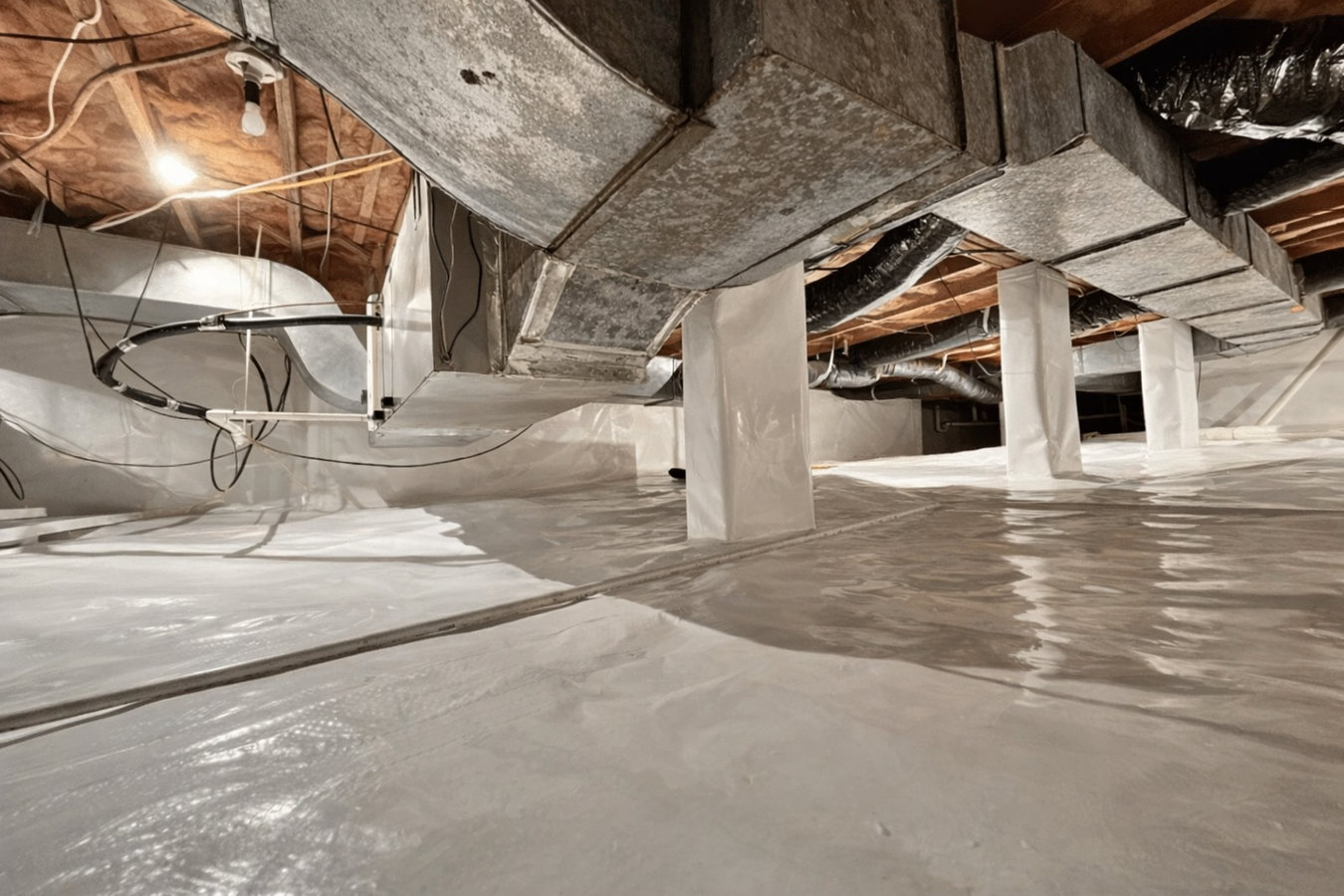
Ground moisture rising into your crawl space rots wood, breeds mold, and drives up your energy bills. A properly installed vapor barrier stops it at the source.
Crawl space vapor barrier installation in Clinton, IA blocks ground moisture from rising into your floor joists, subfloor, and living areas by laying heavy plastic sheeting across the soil floor and sealing it against the foundation walls. Most jobs on a typical single-family home take one to two days.
In Clinton, this is not a luxury upgrade - it is basic protection against the Mississippi River humidity and the freeze-thaw cycles that push moisture upward from the soil year-round. Many homes built before the 1980s were constructed without any vapor barrier at all, leaving bare soil directly under the floor framing for decades. If you have noticed a musty smell, soft floors, or climbing utility bills, a vapor barrier is often the starting point. Pairing it with crawl space insulation gives your home the most complete protection from the ground up.
That earthy, damp odor that shows up every year as the snow melts is almost always coming from below. Clinton's freeze-thaw cycle releases a surge of ground moisture in late winter and early spring, and a crawl space without a vapor barrier channels it straight into your living areas. The smell is your home telling you the moisture is already getting in.
Wood floor joists and subflooring that have absorbed moisture over the years begin to soften and sag. If you notice a bounce or give when you walk across certain spots - especially near the center of a room or along an exterior wall - that is a sign the wood underneath may have been compromised. This is especially common in Clinton's older homes where no vapor barrier was ever installed.
If you open the crawl space hatch and see exposed dirt - or worse, puddles - there is nothing between your home's structure and the ground moisture. You do not need any special knowledge to recognize this. Even a quick look with a flashlight will tell you what you need to know, and bare soil in a crawl space is a clear sign a barrier is needed.
Damp air in a crawl space makes your heating and cooling system work harder because moisture-saturated air is more difficult to condition than dry air. If your utility bills have been climbing without an obvious cause, crawl space moisture is worth investigating. Clinton's humid summers mean this problem tends to show up most noticeably during July and August when air conditioning is running constantly.
We install heavy-duty polyethylene sheeting across the entire crawl space floor, overlapping and taping every seam so moisture has no gap to work through. The material runs up the foundation walls and is secured in place - not just laid flat. The result is a continuous, sealed layer that holds up through Clinton's wet springs and cold winters, not a thin sheet that tears the first time someone crawls in for a plumbing inspection.
For homes that need more comprehensive protection, we also offer vapor barrier installation covering basement and broader crawl space applications, and can pair any vapor barrier project with crawl space insulation for a complete moisture and thermal envelope. We use material thick enough to withstand routine maintenance foot traffic - you will notice the difference compared to a flimsy sheet.
Suits most Clinton homes with accessible crawl spaces, bare soil, and no standing water.
Suited for homes near the Mississippi River or in lower-lying neighborhoods where the water table sits close to the surface.
Suited for older homes or crawl spaces with debris, deteriorated insulation, or minor moisture damage that needs to be cleared before the barrier goes in.
Suited for homeowners who want to address both moisture and energy loss in one project, reducing return trips and total cost.
Clinton sits directly on the Mississippi River and experiences a humid continental climate with hot, wet summers and winters that freeze and thaw repeatedly from November through March. That combination means the soil under your home is constantly cycling between saturated and dry, pushing moisture upward year-round. Homes in lower-lying areas near the river sit above a water table that is closer to the surface than in most inland Iowa cities, which means more ground moisture is always available to migrate up through an unprotected crawl space floor. Homeowners in Camanche, IA and DeWitt, IA face similar conditions and benefit from the same protection.
A large share of Clinton's residential neighborhoods were built in the mid-20th century or earlier, long before vapor barriers were standard practice. If your home was built before 1980, there is a real chance the crawl space has bare soil with no protection at all - meaning moisture has potentially been working on your floor joists and subfloor for decades. The U.S. Department of Energy identifies moisture control in crawl spaces as one of the most cost-effective home improvements available, particularly in humid climates like eastern Iowa's.
We ask a few quick questions about your home's size, what you have noticed, and how accessible the crawl space is. We respond within one business day and can usually schedule an on-site estimate within the week.
We access the crawl space and check the condition of the soil, existing materials, clearance, and whether any prep work - like debris removal or minor water issues - needs to happen first. This visit takes 30 to 60 minutes, and we walk you through what we found before we leave.
You receive a written estimate specifying material type and thickness, seam handling, and any prep work included in the price. No verbal-only quotes. Once you are ready, we schedule the installation - most jobs take one full day.
The crew lays sheeting across the entire floor, overlaps and tapes every seam, and runs the material up the foundation walls. Before leaving, we show you photos of the finished installation so you can see the coverage yourself.
Free estimate. Written quote before any work begins. We respond within one business day.
(563) 206-5767Before we leave your property, we walk you through photos of the completed installation inside the crawl space. You can see every seam, every edge, and every section of wall coverage for yourself - no taking our word for it.
We know which Clinton projects need a permit and we handle that paperwork for you. Every job is documented, so you have a clear record of the work if you ever sell your home.
We work in Clinton's older housing stock regularly - homes with original foundations, limited crawl space clearance, and decades of unprotected soil. We know what to look for, what prep work is actually needed, and when to recommend heavier-duty material for river-adjacent properties.
Your written estimate specifies the material type and thickness, how seams will be handled, and exactly what prep work is included. The price you agree to before work starts is the price you pay. The EPA's guidance on moisture and mold underscores why cutting corners on materials is never worth the short-term savings.
Clinton homes face real, ongoing moisture pressure from the river, the climate, and decades of older construction. We combine local knowledge with materials and installation practices designed to hold up through eastern Iowa's wet springs and hard winters.
Broader vapor barrier services covering basement applications and homes that need more than a standard crawl space barrier.
Learn MoreAdd thermal protection to your crawl space alongside moisture control for a complete ground-up solution.
Learn MoreSpring thaw is the hardest time of year on Clinton crawl spaces. Call us now to schedule your free estimate before the moisture damage continues.